Aerosol Fire Extinguisher – NAFEG-TD Model
 NAFEG-TED / AEROSOL
Aerosol Fire Extinguisher – NAFEG-TED Model
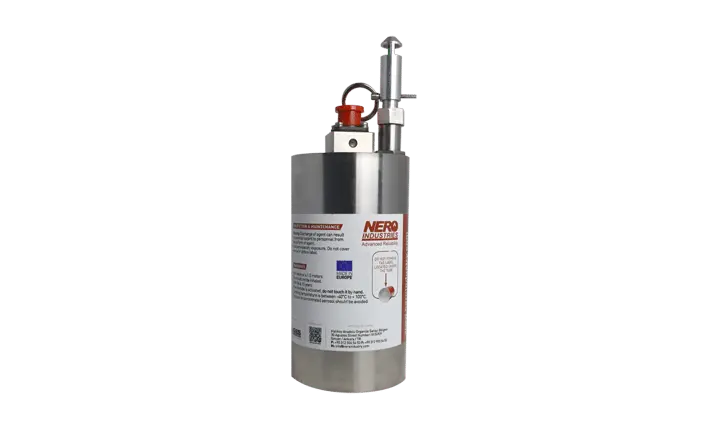
NAFEG-TED combines local fire detection and aerosol suppression in a compact self-contained system, with electric, manual and mechanical activation options for flexible integration.
A multi-activation aerosol solution for enclosed spaces requiring autonomous thermal response or integration with an electrical fire-protection architecture.
Flexible Fire Protection for Enclosed Spaces
Compact and autonomous fire protection solutions are essential in enclosed spaces where rapid fire detection and immediate suppression can prevent serious damage. In applications where electrical power may be unavailable or system independence is critical, integrated detection and extinguishing technologies offer a decisive advantage.
The NAFEG-TED Aerosol Fire Extinguisher Model combines detection and suppression functions in a single compact architecture. Unlike a purely mechanical configuration, the TED model also supports electrical activation through a military connector, giving system designers multiple ways to integrate the extinguisher into the protected platform or facility.
Electric, Manual and Temperature-Based Activation
NAFEG-TED supports Military Connector (Electric), PIN and Set Temperature activation methods. Its listed activation modes are Electric, Manual and Mechanic, allowing the system to operate as part of an electrical control architecture or through independent local activation arrangements.
For electric activation, the specified supply requirement is 1.2 A – 24V DC. Thermal configurations can be selected at 57°C, 68°C, 79°C, 93°C, 141°C or 180°C, providing multiple preset response thresholds for different installation requirements.
Technology <10
Microns
Condensed Aerosol Suppression Technology
The extinguishing process uses an aerosol-generating solid compound based on alkaline metal salts and auxiliary materials. When activated, a redox reaction inside the non-pressurized canister generates a condensed aerosol containing potassium carbonate and bicarbonate, water vapor, carbon dioxide and nitrogen.
Fine particles below 10 microns disperse through the protected enclosure. Fire suppression is produced by the combined effect of flame cooling and chemical interruption of the free-radical reactions involved in combustion.
NAFEG-TED System Highlights
Multiple Activation Methods
Electric, PIN and preset-temperature activation options support different protection architectures and installation requirements.
Integrated Thermal Response
Selectable thermal thresholds allow the unit to respond locally when the configured activation temperature is reached.
Electrical System Integration
A military connector enables electric activation, with a specified requirement of 1.2 A at 24V DC.
Rapid Aerosol Discharge
The technical specification defines a discharge duration of 4–6 seconds and a discharge distance of 2 meters.
Three Protection Capacities
Available configurations are specified for extinguishing volumes of 1.25 m³, 2.5 m³ and 5 m³.
Broad Operating Range
The listed operating temperature range extends from -40°C to +120°C for demanding installation environments.
NAFEG-TED Application Configurations
Autonomous Thermal Protection
- Activation
- Preset temperature threshold.
- Options
- 57 / 68 / 79 / 93 / 141 / 180°C.
- Use
- Local protection where independent thermal response is required.
Electrically Integrated Protection
- Activation
- Military Connector (Electric).
- Supply
- 1.2 A – 24V DC for electric activation.
- Use
- Integration with an electrical fire detection or control architecture.
Manual / Mechanical Protection
- Activation
- PIN / manual–mechanic configuration.
- Fire Classes
- A / B / C / E as listed in the technical data.
- Protection
- IP67 is available as an optional protection level.
Application Areas
Testing Standards & Product References
The supplied NAFEG-TED material lists ISO 15779, EN 3-7, UL 711A and NFPA 10 as the relevant testing standards and certification references for the aerosol fire extinguisher range.
Frequently Asked Questions
01 Which activation methods are available on the NAFEG-TED model?
The technical data lists Military Connector (Electric), PIN and Set Temperature activation, with electric, manual and mechanical activation modes.
02 Does NAFEG-TED require electrical power in every configuration?
No. Electrical power is specified for the electric activation option. PIN and preset-temperature activation provide alternative activation arrangements.
03 What is required for electric activation?
The supplied technical table specifies 1.2 A – 24V DC for electric activation.
04 Which thermal activation temperatures are available?
Available thermal detection options are 57°C, 68°C, 79°C, 93°C, 141°C and 180°C.
05 What extinguishing volumes are listed for NAFEG-TED?
The technical specification lists configurations for 1.25 m³, 2.5 m³ and 5 m³ extinguishing volumes.
Technical Data
Need More Information About This System?
Contact our team for product specifications, system configuration and application-specific fire suppression requirements.