NAFEG Aerosol Fire Extinguisher
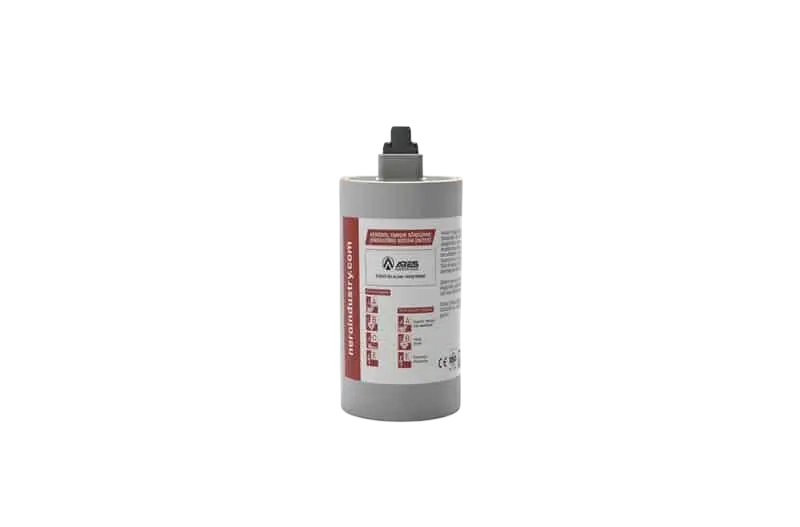 NAFEG / AEROSOL
NAFEG Aerosol Fire Extinguisher
Compact and self-contained, NAFEG combines aerosol fire suppression with flexible activation options for enclosed spaces where a developing fire must be addressed quickly.
An integrated aerosol suppression solution developed for compact installations, enclosed hazards and applications requiring rapid local fire control.
Autonomous Fire Suppression for Enclosed Spaces
Compact, independent fire protection can be especially valuable in enclosed spaces where a small fire may develop rapidly and access for manual intervention is limited. NAFEG brings the detection and suppression functions together in a single aerosol-based unit, reducing the need for a conventional centralized extinguishing arrangement.
The NAFEG Aerosol Fire Extinguisher can operate as a self-contained suppression device and can also be incorporated into a controlled fire protection architecture when required. Thermal activation options allow the unit to respond at selected temperature thresholds according to the application.
Integrated Detection and Rapid Aerosol Discharge
NAFEG can be configured with thermal activation thresholds of 57°C, 68°C, 79°C, 93°C, 141°C or 180°C. When the selected activation condition is reached, the unit initiates the aerosol discharge into the protected space.
The source technical data specifies a discharge duration of 4–6 seconds and a discharge distance of 2 meters. This supports fast local distribution of the extinguishing aerosol within the intended protection zone.
Technology <10
Microns
How Aerosol Suppression Interrupts Combustion
NAFEG uses a solid aerosol-generating compound based on alkaline metal salts. Following activation, the reaction produces a fine extinguishing aerosol containing components identified in the source material as potassium carbonate, water vapor, carbon dioxide and nitrogen.
Aerosol particles measuring below 10 microns are dispersed through the protected volume. Fire suppression is achieved through a combination of flame cooling and chemical interference with the free-radical reactions that sustain combustion.
NAFEG System Highlights
Self-Contained Architecture
Detection and extinguishing can be combined within a compact local suppression unit, supporting installations where a large centralized system is impractical.
Selectable Thermal Activation
Thermal activation options from 57°C to 180°C allow the response threshold to be selected according to the protected application.
Fast Aerosol Discharge
The technical specification defines a discharge time of 4–6 seconds for rapid release into the protected volume.
Compact Installation
The aerosol format is suited to confined compartments and localized hazards where available installation space is limited.
Multiple Protection Volumes
Technical configurations are specified for extinguishing volumes of 1.25 m³, 2.5 m³ and 5 m³.
Electrical System Integration
The technical configuration includes electric activation through a military connector with a specified 1.2 A – 24 VDC power supply.
Application-Oriented NAFEG Configurations
Thermally Activated Configuration
- Activation
- Temperature-based response using a selected thermal threshold.
- Temperature Options
- 57°C, 68°C, 79°C, 93°C, 141°C or 180°C.
- Use
- Local autonomous protection for enclosed hazards.
Electrically Activated Configuration
- Activation
- Electric activation through a military connector.
- Power Supply
- 1.2 A – 24 VDC.
- Use
- Integration with a wider fire detection or control architecture.
NAFEG-TED Configuration
- Architecture
- Detection and aerosol suppression integrated into one unit.
- Operation
- Designed for autonomous operation or control-unit integration.
- Use
- Compact fire protection where local detection and suppression are required together.
Application Areas
Fire Suppression Standards & Certifications
The source material identifies ISO 15779, EN 3-7, UL 711A and NFPA 10 as the standards and certification references associated with the NAFEG aerosol extinguisher. These references are retained here as product-source specifications.
Frequently Asked Questions
01 Which thermal activation temperatures can be selected for NAFEG?
Available thermal activation thresholds are 57°C, 68°C, 79°C, 93°C, 141°C and 180°C, allowing the activation point to be matched to the application.
02 What protection volumes are specified for the NAFEG aerosol extinguisher?
The technical data lists configurations for 1.25 m³, 2.5 m³ and 5 m³ extinguishing volumes.
03 How long does the aerosol discharge process take?
The specified discharge time is 4–6 seconds, with a stated discharge distance of 2 meters.
04 How does the aerosol agent suppress a developing fire?
The aerosol acts through two complementary effects: it contributes to flame cooling and interferes chemically with the free-radical reactions that maintain combustion.
05 Can NAFEG be integrated into an electrically controlled fire protection system?
Yes. The technical configuration includes electric activation through a military connector and specifies a 1.2 A – 24 VDC power supply.
Technical Data
Need More Information About This System?
Contact our team for product specifications, system configuration and application-specific fire suppression requirements.